Genmega G2500 ATM Machine Review and Buyer Tips
- Jul 9
- 9 min read

For many U.S. business owners, the right ATM is not the flashiest machine. It is the one that earns consistently, fits the space, stays secure, and gives customers a simple way to access cash when they need it. That is why the Genmega G2500 ATM machine is one of the most common models considered by convenience stores, smoke shops, bars, restaurants, laundromats, salons, event venues, and other retail locations.
This review looks at the G2500 from a buyer’s point of view: what it does well, where it may not be the best fit, what to ask before you buy, and how to estimate whether it makes sense for your location.
Quick verdict: who should consider the Genmega G2500?
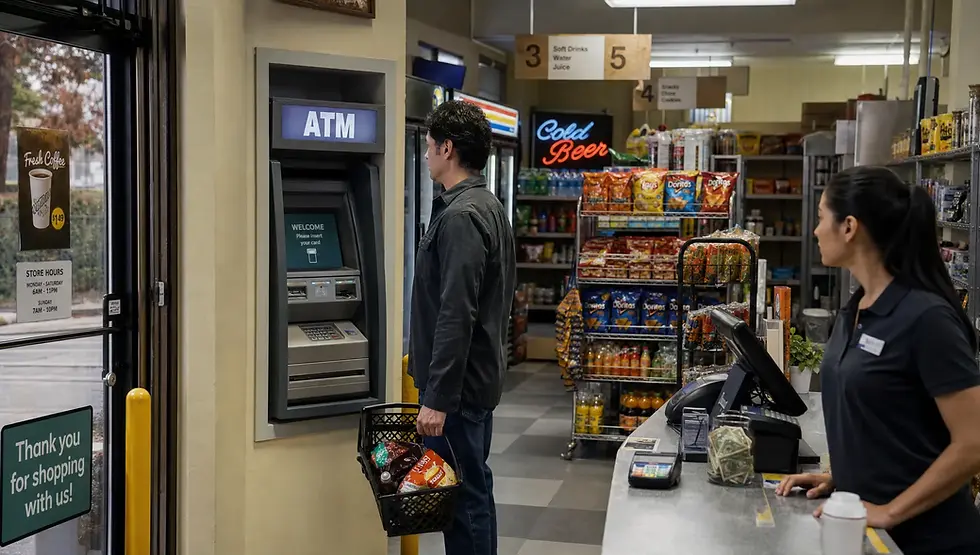
The Genmega G2500 is best understood as a dependable, floor-standing retail ATM built for everyday cash access. It is not a through-the-wall bank-style unit, and it is not a compact countertop machine. It is a practical lobby ATM for businesses that want to place a machine indoors, connect it to processing, and earn surcharge income while improving customer convenience.
For the right location, the G2500 can be a strong choice because it balances cost, durability, parts availability, and customer familiarity. The interface is straightforward, the footprint works for many retail environments, and the model is widely recognized in the independent ATM market.
It is a particularly good fit if your business has regular foot traffic, customers who still pay with cash, or nearby cash-only services. According to the Federal Reserve’s Diary of Consumer Payment Choice, cash continues to play an important role in lower-value, in-person transactions, which is exactly where a retail ATM can add value.
Genmega G2500 pros and cons
No ATM is right for every business. The G2500 is attractive because it keeps the buying decision simple, but you should still compare it against your location, cash volume, security needs, and long-term service plan.
Category | What buyers usually like | What to consider before buying |
Cost and value | Often positioned as a lower-cost retail ATM option compared with larger or wall-mounted units | Total cost depends on processing, shipping, installation, cash loading, and optional upgrades |
Placement | Works well as an indoor free-standing ATM | Not ideal if you need exterior access or a through-the-wall setup |
Customer experience | Familiar ATM layout and simple cash withdrawal flow | Display, card reader, and contactless options can vary by configuration |
Maintenance | Popular model with broad parts and service familiarity | You still need a plan for cash, receipt paper, support, and repairs |
Security | Can be paired with security features depending on the seller and configuration | Location security, anchoring, camera coverage, and vault access matter as much as the machine itself |
The biggest advantage is that the G2500 usually gives small and mid-sized businesses a realistic entry point into ATM ownership. The biggest risk is buying based only on the sticker price without understanding the full operating picture.
Best business types for a G2500 ATM
A good ATM location is not just a place with people. It is a place where people have a reason to use cash. The G2500 tends to work best in businesses where cash either supports the main purchase or solves a customer need nearby.
Common examples include convenience stores, liquor stores, smoke shops, tattoo shops, bars, clubs, laundromats, barbershops, salons, check-cashing adjacent retail, repair shops, and entertainment venues. These businesses often benefit from cash access because customers may want to avoid card minimums, tip in cash, pay vendors, use cash-only services, or manage personal spending.
For very high-volume cash locations, the G2500 can still be relevant, but your decision should include cassette capacity, refill frequency, and security procedures. Denali ATM has a separate resource on ATM options for high-cash businesses that is useful if your location regularly handles larger cash activity.
If you need a machine outside the building, through a wall, or accessible after business hours, a wall-mounted or through-the-wall ATM may be a better fit. If you have very limited space, a mini wall or countertop ATM may be more practical. The G2500 is strongest when you have an indoor lobby, a visible placement area, and enough traffic to justify a full-size retail ATM.
Key features to evaluate before you buy
A buyer should not treat every G2500 quote as identical. The cabinet may be the same general model, but the full package can vary based on whether the unit is new or refurbished, which card reader is included, what lock and security options are installed, how processing is set up, and what support comes with the purchase.
Start with card acceptance. Most U.S. buyers should confirm EMV capability and ask whether contactless or Tap 2 Pay options are available in the specific configuration being quoted. Customer payment habits have changed, and even ATM users increasingly expect modern card-reading experiences. If you want a broader breakdown of card-reader considerations, Denali’s guide on how to choose a card reader ATM machine is a helpful companion before you decide.
Next, look at security. The machine should be placed where staff can monitor it, customers can use it comfortably, and suspicious activity is less likely. Ask about lock type, anchoring, camera options, alarm compatibility, and who has access to the vault. If your seller includes a built-in camera or other security upgrades, confirm exactly what is included in writing.
Receipt paper, receipt printer reliability, screen condition, keypad condition, software setup, manuals, training, and reporting access also matter. These details sound small, but they affect daily operation. A great ATM purchase is not only about the machine arriving. It is about getting the machine installed, connected, stocked, monitored, and supported without confusion.
Estimating ROI for a Genmega G2500 ATM
The return on an ATM depends on usage, surcharge amount, processing agreement, cash availability, and costs. It is tempting to focus only on surcharge revenue, but a more realistic estimate includes the expenses and responsibilities that come with ownership.
A simple starting formula is:
Monthly gross surcharge revenue = average withdrawals per day x surcharge amount x 30
For example, if your ATM averages 8 withdrawals per day at a $3.00 surcharge, the gross surcharge amount would be $720 per month before any splits, fees, cash costs, or service expenses. That does not mean your net profit is $720. It gives you a baseline to discuss with your ATM provider.
ROI factor | Why it matters | Buyer tip |
Daily withdrawals | Main driver of surcharge revenue | Estimate conservatively, then compare after 30, 60, and 90 days |
Surcharge amount | Affects earnings and customer willingness to use the machine | Check local competition and customer expectations |
Processing terms | Determines how surcharge income is paid and reported | Ask how deposits, reports, and settlement timing work |
Cash loading | Affects labor, security, and uptime | Decide who loads cash and how often refills will happen |
Service costs | Impacts net income when repairs are needed | Confirm warranty, support hours, and parts availability |
Downtime | Every inactive day can reduce revenue and customer trust | Have a support plan before the first transaction |
A practical buyer tip is to work backward from your payback goal. If your total installed cost is $2,500 and your net ATM income after expenses is $250 per month, your rough payback period is 10 months. If net income is $100 per month, the payback period is 25 months. The same machine can be a great investment in one store and a slow performer in another.
New, refurbished, or used: what should you choose?
The G2500 is common enough that buyers may find new, refurbished, and used units on the market. The right choice depends on your budget, risk tolerance, and how much support you need.
Purchase type | Best for | Watch out for |
New ATM | Owners who want the cleanest start, current configuration, and seller support | Higher upfront cost than used equipment |
Refurbished ATM | Buyers who want lower cost but still expect testing and some seller accountability | Refurbishment quality varies widely |
Used private-sale ATM | Experienced operators who can inspect, reprogram, and repair machines | Unknown history, outdated parts, missing keys, or unsupported software |
For most first-time ATM buyers, the cheapest private-sale machine is rarely the safest choice. A missing key, bad dispenser, outdated card reader, or unsupported processor can turn a bargain into a frustrating project. If you buy used, ask for the serial number, photos of the exact unit, proof of working condition, lock details, software status, and confirmation that the machine can be boarded with your processor.
If you buy through a dedicated ATM seller, compare the full package rather than only the price. Denali ATM’s current Genmega G2500 ATM options can help you evaluate what is included, such as machine configuration, available upgrades, processing, and support.
Buyer questions to ask before placing an order
Before you buy a Genmega G2500 ATM machine, ask questions that reveal the real ownership experience. A clear seller should be able to explain the machine, processing, funding, support, and installation steps in plain language.
Is the ATM new, refurbished, or used, and what exactly has been tested?
Which card reader and security features are included in this quote?
Does the package include shipping, receipt paper, training, or reporting access?
Who handles processing setup, and how are surcharge funds paid?
What are the warranty terms and support hours?
Who loads cash, and what happens if the machine runs out?
Is financing available if I do not want to pay the full amount upfront?
What do I need at the location for power, internet, phone line, or wireless connectivity?
Can the machine be anchored, and where should it be placed for security and customer flow?
Are there any ongoing fees, monthly minimums, or service charges I should know about?
This is also where customer-facing communication matters. ATM surcharge notices, receipt language, and store signage should be clear, accurate, and compliant with your processor’s requirements. If you use AI tools to draft store notices or marketing copy, resources that discuss AI-writing detection and humanizing text can help you understand how machine-generated language is evaluated, but final ATM disclosures should still be reviewed through the proper compliance channels.
Installation and placement tips
Placement can make or break ATM performance. A machine hidden in a back corner may get fewer transactions, even in a busy store. A machine placed too close to a doorway may create security concerns or interfere with customer flow.
Aim for a visible indoor location with good lighting, enough privacy for PIN entry, and easy staff observation. Avoid placing the ATM where customers feel exposed from behind or where a line blocks the checkout counter. If possible, position it near the natural path customers already take, such as near the entrance, checkout area, or service counter, while still preserving privacy.
You should also think about cash loading. The person responsible for loading cash needs safe access to the machine. If the ATM is wedged into a narrow corner, routine cash handling becomes harder and less secure. A few inches of clearance and a better camera angle can make a meaningful difference.
Connectivity is another practical detail. Depending on your setup, the ATM may use a wired internet connection, phone line, or wireless solution. Ask your seller what connection is recommended for your location and what backup options exist if service goes down.
Common mistakes first-time ATM buyers make
The most common mistake is choosing the lowest upfront price without comparing support, processing, and machine condition. An ATM is a revenue asset, but only if it is working, stocked, secure, and visible.
Another mistake is overestimating transaction volume. If you assume 25 transactions per day but the location produces 5, your payback timeline changes quickly. Use conservative projections and adjust after the machine has real transaction history.
Business owners also sometimes ignore surcharge competition. If there are three nearby ATMs with lower fees, your machine may still perform, but you should not guess. Check the area before choosing your surcharge.
Finally, do not treat compliance as an afterthought. Confirm required disclosures, accessibility considerations, receipt settings, and processor rules before the machine goes live. Requirements can vary by setup, so work with your ATM provider rather than relying on generic advice.
Is the Genmega G2500 worth it?
For many retail businesses, yes, the Genmega G2500 is worth considering. It offers a strong mix of affordability, familiarity, and practical retail functionality. It is not the right choice for every location, but it is a sensible option for indoor businesses that want to add customer convenience and potential surcharge income without stepping into a much more expensive ATM category.
The best way to decide is to evaluate your location first, then evaluate the machine. If your business has daily foot traffic, customers who use cash, a safe indoor placement area, and a clear plan for cash loading and support, the G2500 can be a smart investment.
If your needs are more specialized, such as exterior access, very limited floor space, or extremely high transaction volume, compare other ATM formats before buying. The right machine is the one that matches your real environment, not just the one with the lowest advertised price.
Frequently Asked Questions
Is the Genmega G2500 ATM machine good for small businesses? Yes, it can be a good fit for many small businesses with steady foot traffic and a need for on-site cash access. It is especially practical for indoor retail locations where customers can see and access the machine easily.
How much money can a Genmega G2500 ATM make? Earnings depend on transaction volume, surcharge amount, processing terms, and expenses. A location with more daily withdrawals will generally perform better, but buyers should estimate conservatively and review actual reports after installation.
Do I need to load the ATM with my own cash? It depends on your ownership and service arrangement. Some owners load their own cash, while others may work with a service provider. Ask your ATM seller or processor what options are available for your area.
Should I buy a new or refurbished G2500? New machines are usually better for buyers who want a cleaner start and stronger support. Refurbished units can offer savings, but only if they are properly tested and sold by a reputable provider.
What should I ask before buying a G2500 ATM? Ask about card reader configuration, security features, processing, surcharge deposits, warranty, support, shipping, training, receipt paper, installation requirements, and whether financing is available.
Ready to compare ATM options?
If you are evaluating the Genmega G2500 for your business, Denali ATM can help you compare wholesale ATM machines, processing options, shipping, support, and financing. You can start with the G2500, then compare other formats if your location needs a wall-mounted, compact, or higher-volume setup.
Visit Denali ATM to review current ATM machine options and get guidance on the best fit for your business location.


Comments